
Azure Service Bus Integration
Reliable async messaging between services that can't afford to lose a message
Azure Service Bus decouples your services, absorbs load spikes, and guarantees message delivery, even when downstream systems are temporarily unavailable. We design Service Bus topologies, build idempotent consumers, and instrument the full message flow so your async pipelines are observable and operationally sound.
Production-grade Service Bus integration
Queue & topic/subscription design
Message schema & serialisation
Dead-letter queue handling
Idempotent consumers
Azure Functions & Worker Service consumers
Observability & alerting
Four scenarios where async messaging transforms your architecture
Decoupling services that can't afford to fail
When one service going down should not cascade to another, Service Bus provides durable message storage, the producer continues working while the consumer recovers. At-least-once delivery guarantees no message is lost.
Long-running or expensive processing
Offload costly operations, document processing, email sending, third-party API calls, to async Service Bus consumers rather than blocking HTTP requests. Users get immediate responses; heavy work runs in the background.
Ordered processing with sessions
When messages related to the same entity must be processed in order, orders for the same customer, state transitions for the same document, Service Bus sessions provide first-in-first-out guarantees per session key.
Publish/subscribe across multiple consumers
When a single event (order placed, payment received) needs to trigger multiple independent downstream actions, inventory update, fulfilment notification, analytics event, Service Bus topics fan out to independent subscribers.
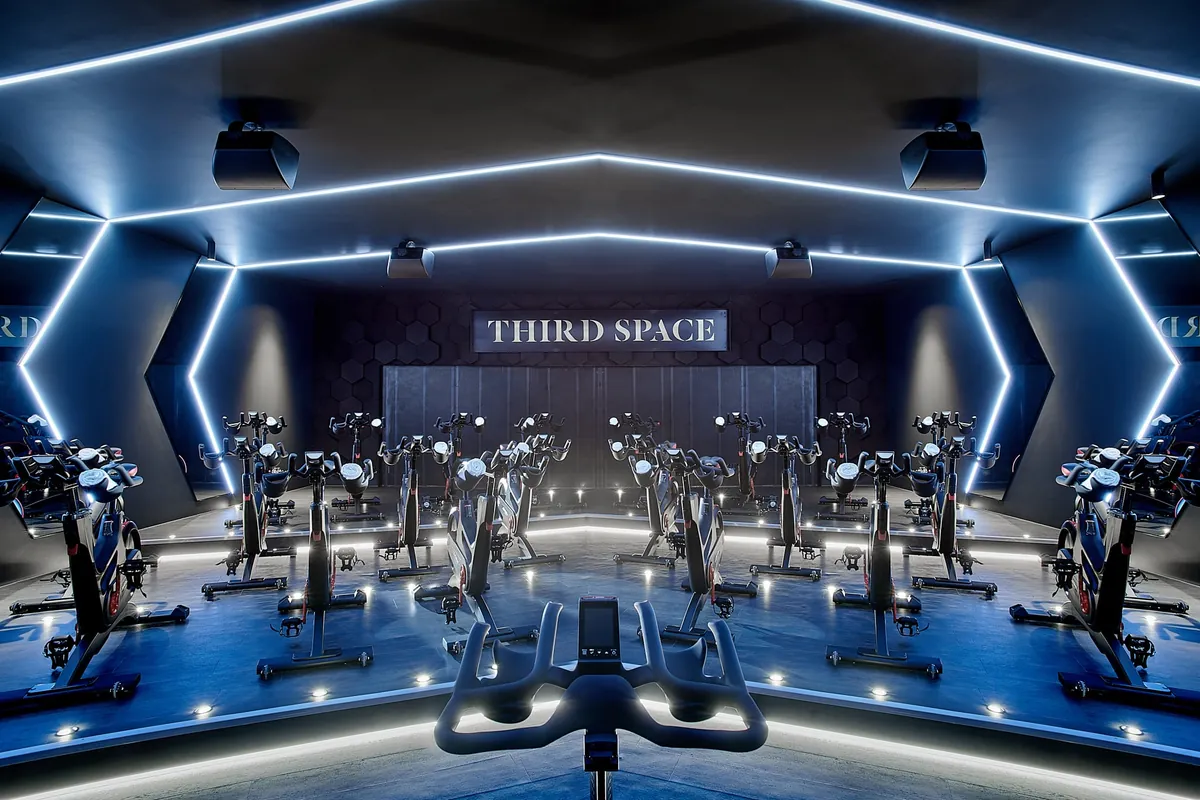
Async messaging powering London's leading luxury gym collection
99.99% uptime across 13 clubs
A cloud-native platform on Azure Kubernetes Service delivers consistent reliability, supporting over 13,000 classes a month.
40 hours weekly admin saved
Automation and streamlined workflows freed approximately 40 hours per week on cover and scheduling, allowing teams to focus on member experience.
Premium digital member experience
Redesigned member and instructor apps mirror the quality of the in-club environment, reinforcing Third Space's premium positioning with faster bookings and real-time schedules.
Queue, topic, or Event Grid?
Choosing the right Azure messaging primitive depends on your consumer model and delivery guarantees.
Our Service Bus delivery process
From message modelling to production observability, a structured approach that makes your async pipelines reliable from day one.
Integration Design & Message Modelling
We map your service interactions, identify which communications should be async, and design the Service Bus topology, queues, topics, subscriptions, and message schemas. We also define retry policies, DLQ handling, and monitoring strategy upfront.
Producer & Consumer Implementation
We implement producers (sending messages with correlation IDs and schema headers) and consumers (with idempotency keys, retry policies, and graceful shutdown). Azure Functions or Worker Services are built alongside the Services Bus configuration.
DLQ Tooling, Testing & Load Validation
We build DLQ monitoring dashboards and replay tooling. We run integration tests covering failure scenarios (consumer crashes, poison messages, duplicate delivery) and load tests to validate throughput under peak conditions.
Production Deployment & Observability
We deploy to your Azure environment with Application Insights distributed tracing configured across the full message flow, from producer to consumer, so you can trace any message end to end in Azure Monitor.
Seen enough? Let's talk through your requirements.
Book a free consultationFrequently asked questions
What is the difference between Azure Service Bus and Azure Event Hubs?
Service Bus is an enterprise messaging broker designed for reliable, ordered message delivery with features like sessions, dead-lettering, and message deferral. It suits application-to-application integration and workflow orchestration.
Event Hubs is a high-throughput event streaming service designed for telemetry ingestion, log streaming, and Kafka-compatible workloads. If you need to send millions of events per second to analytics systems, use Event Hubs. If you need reliable, transactional messaging between services, use Service Bus.
What is the difference between a queue and a topic?
A queue delivers each message to exactly one consumer, point-to-point. A topic delivers each message to all subscriptions, where each subscription acts like an independent queue with its own filter rules. Use queues for task distribution; use topics when multiple independent services need to react to the same event.
How do you prevent duplicate message processing?
We implement idempotent consumers using a combination of Service Bus's built-in duplicate detection (for producers) and idempotency keys stored in your database (for consumers). This ensures that if a message is delivered more than once, which at-least-once delivery guarantees can happen, it produces exactly one side effect.
What happens to messages that fail processing?
Messages that exceed the maximum delivery count go to the dead-letter queue (DLQ). We build DLQ monitoring with Azure Monitor alerts that fire when the DLQ accumulates messages, operational dashboards that show message metadata and error reasons, and safe replay tooling so your operations team can reprocess messages after fixing the root cause.
Can Service Bus handle high message volumes?
Yes, with Premium tier namespaces, partitioned entities, and the right consumer concurrency settings. If your volume requirements push into millions of messages per second, Azure Event Hubs is the better fit. See our Messaging Patterns & Event-Driven Design page. Many systems use both: Service Bus for application integration, Event Hubs for telemetry and analytics pipelines.
See how AI is changing how we build software
Our quarterly AI Velocity Report tracks real delivery metrics from live projects: how much of our code is AI-authored, how delivery timelines compare to baseline, and which tools are making a measurable difference. No marketing spin, just honest data from a team that builds software every day.
Read the latest AI Velocity ReportExplore the wider integration picture
Ready to decouple your services with reliable async messaging?
Book a free consultation to discuss your integration architecture, Service Bus topology, and what a production-grade async messaging project looks like with Talk Think Do.
Book a free consultationor call 01202 006729