
Legacy Application Modernisation and Support
Stop spending 80% of your IT budget keeping old systems alive
The UK government's 2025 State of Digital Government review found departments spending up to 80% of IT budgets just keeping legacy systems running. The pattern is the same in the private sector. We modernise applications on Microsoft Azure using the right strategy for each component, whether that is replatforming, refactoring, or rebuilding entirely. AI-augmented development accelerates the process.
Why legacy systems cost more than you think
The real cost of legacy technology is not the maintenance bill. It is the opportunities you miss while your budget and team are tied up keeping old systems running.
Spiralling maintenance costs
Most enterprises spend 60-80% of their IT budget maintaining legacy systems. That budget goes to keeping the lights on, not to innovation, growth, or competitive advantage.
Security exposure
Outdated dependencies, missing patches, and unsupported frameworks create real security vulnerabilities. Legacy systems are the number one target for attackers because they are the easiest to exploit.
Talent shortage
Engineers who know your legacy stack are retiring or moving on. Recruiting for outdated technologies gets harder and more expensive every year, and the knowledge walks out the door with them.
Innovation blocked
AI, mobile, real-time analytics, and cloud-native capabilities are difficult or impossible to integrate with legacy architectures. Your technology becomes the bottleneck, not the enabler.
What legacy modernisation actually means for your organisation
Legacy modernisation is the process of taking an old, expensive, or hard-to-maintain system and making it work on a modern platform. In practice, this means moving your software from ageing servers or outdated cloud setups to managed Azure services where it costs less to run, is easier to change, and is properly secured.
Not everything needs to be rebuilt from scratch. Sometimes the right answer is a targeted move to a managed database, a containerised deployment, or a focused refactor of the parts that cause the most pain. We assess each component individually and recommend the approach that balances cost, risk, and business impact.
AI-augmented delivery means we analyse large codebases faster, generate migration code at speed, and validate functional parity more thoroughly. For our clients, this translates to shorter modernisation timelines and lower project risk.
Legacy software development UK organisations can rely on
We provide legacy software development from a permanent, UK-based team certified to ISO 27001 and Cyber Essentials Plus. That covers maintaining and extending systems built on older versions of C# and .NET, ASP.NET, SQL Server, and on-premises platforms, as well as phased modernisation to Azure.
Not every system is ready to modernise straight away. Our legacy application support service keeps existing systems stable, secure, and compliant in the meantime, with SLA-backed patching, monitoring, and incident response.
This is how we work with CalMac Ferries, the UK's largest ferry network. We support and enhance the integration platform that connects their booking, payment, and customer communication systems across more than 160,000 sailings and around 5 million passengers a year. Read the CalMac Ferries case study for the detail.
The right approach for each component
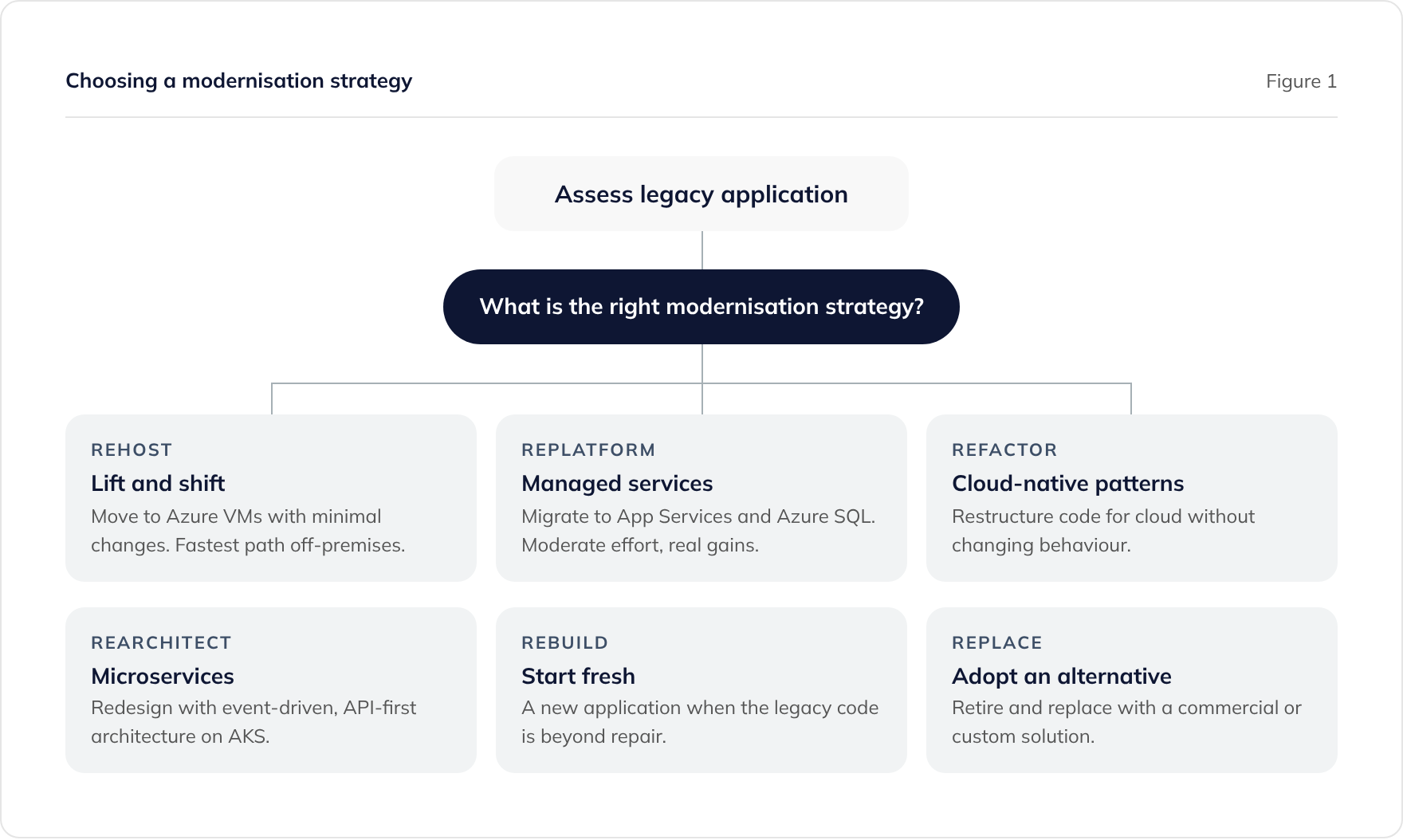
Not every part of your legacy estate needs the same treatment. We use the 6 Rs framework to choose the right strategy for each component based on business value, technical condition, and risk.
Rehost (Lift and Shift)
Move your application to Azure VMs with minimal code changes. Fastest path to cloud, but limited modernisation benefit. Best for: stable applications that need to leave on-premises quickly.
Replatform
Migrate to managed Azure services (App Services, Azure SQL) with targeted optimisations. Moderate effort for meaningful gains in scalability, security, and operational cost.
Refactor
Restructure code to take advantage of cloud-native patterns without changing external behaviour. Break monoliths into smaller services, adopt dependency injection, and improve testability.
Rearchitect
Redesign the application with a modern architecture: microservices on AKS, event-driven patterns, API-first design. Significant effort, but unlocks full cloud-native scalability and maintainability.
Rebuild
Start from scratch with a new application that replaces the old one. Best when the legacy codebase is beyond economical repair and business requirements have changed significantly.
Replace
Retire the legacy application and adopt a commercial or custom alternative. Sometimes the right answer is not modernisation but replacement with something that better fits current needs.
Migration paths on Microsoft Azure
We use Azure's migration tools and managed services to move your applications to the right Azure services for your workload.
Azure Migrate
Containerisation to AKS
Azure App Services & Functions
Database Migration to Azure SQL
"Talk Think Do were brilliant to work with. The platform development was done at such speed that we were able to keep our sights really high, and it felt like it was never too much that we were asking."
Amandeep Sanghera
Business Development Lead, Explore Learning
Choosing the right modernisation strategy
The 6 Rs framework guides every legacy project. The right strategy depends on business value, codebase health, and timeline.
Assessment to production, with AI at every step
Our modernisation methodology combines deep technical assessment with AI-accelerated delivery. You see value incrementally, not at the end of a long waterfall.
Assessment
We assess your legacy estate: architecture, codebase, dependencies, data, integrations, and technical debt. Cursor and Claude Code help us analyse large codebases and identify risk areas quickly. You receive a detailed modernisation report with a recommended strategy, effort estimate, and risk assessment.
Strategy & Architecture
We define the target-state architecture and choose the right modernisation approach for each component. Not everything needs the same treatment: some parts are rehosted, others refactored, and some rebuilt entirely. The strategy balances business continuity with modernisation ambition.
Migration & Build
We execute the modernisation in phased sprints using AI-augmented development tools to accelerate every phase. Parallel running, feature flags, and incremental cutover reduce risk during go-live. Together they protect business continuity. You see progress every two weeks, not at the end of a six-month waterfall.
Optimisation & Support
Post-migration, we optimise performance, cost, and security. Azure Monitor and Application Insights provide visibility into your modernised estate. Our managed application support service provides ongoing maintenance, monitoring, and continuous improvement.
Your modernisation team
Our permanent, UK-based team combines legacy system experience with modern cloud-native expertise and AI-augmented development.
Solution Architect
Designs the target-state architecture, selects the right modernisation approach for each component, and ensures the solution meets your scalability and compliance requirements.
Senior Software Engineers
Execute the modernisation: refactoring code, building new services, migrating data, and integrating with existing systems using AI-augmented development tools. They also set up CI/CD pipelines, infrastructure-as-code, and monitoring for repeatable, zero-downtime deployments.
Delivery Manager
Your main point of contact. Manages scope, timeline, risk, and stakeholder communication throughout the modernisation programme.
QA Analyst
Validates that modernised applications maintain functional parity and performance with regression testing, automated test suites, and user acceptance testing.
About Talk Think Do
Talk Think Do is a UK-based software consultancy founded by Matt Hammond and headquartered in Bournemouth, Dorset.
We are a Microsoft Solutions Partner with designations in Azure Infrastructure, Digital & App Innovation, and DevOps & GitHub.
We specialise in legacy application modernisation and legacy software development on Microsoft Azure. We move UK organisations from on-premises and outdated cloud deployments to modern, scalable platforms.
Our stack includes C# and .NET, Azure Kubernetes Service (AKS), and infrastructure as code (IaC) with Bicep.
AI-augmented development accelerates every phase of our modernisation work.
Cursor and Claude Code help us analyse legacy codebases. They help us identify risk areas, generate migration code, and validate functional parity faster than manual approaches allow.
Keep legacy systems supported while you plan the next step
Not every legacy system is ready for a rebuild today. Budget, timing, or risk may mean the right call now is to keep the existing platform running reliably and plan modernisation in a later financial year.
Our legacy application support service delivers SLA-backed patching, monitoring, incident response, and compliance evidence for systems you cannot replace yet. When modernisation becomes the right call, the same UK team transitions you into a modernisation programme without a second discovery phase.
See legacy application supportModernising a mission-critical government platform
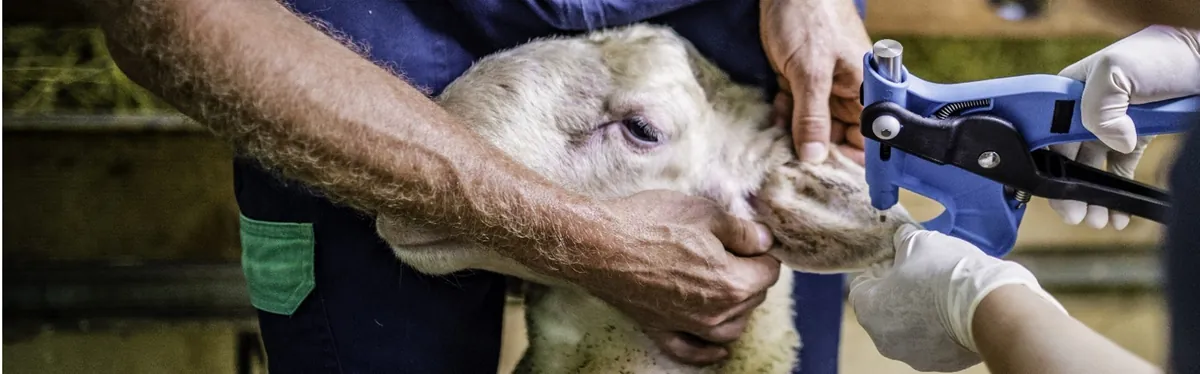
25 million tags managed
Supported the ordering and fulfilment of over 25 million livestock identification tags in the 2024-2025 period, maintaining compliance for the UK livestock sector.
Improved code quality and maintainability
Targeted refactoring and extensive automated testing reduced long-term maintenance costs and enabled faster feature delivery.
Policy-ready platform evolution
Enhanced LUIS to support additional livestock categories and new ordering processes, ensuring the mission-critical system can respond quickly to evolving policy requirements.
Cloud-native transformation for online tutoring
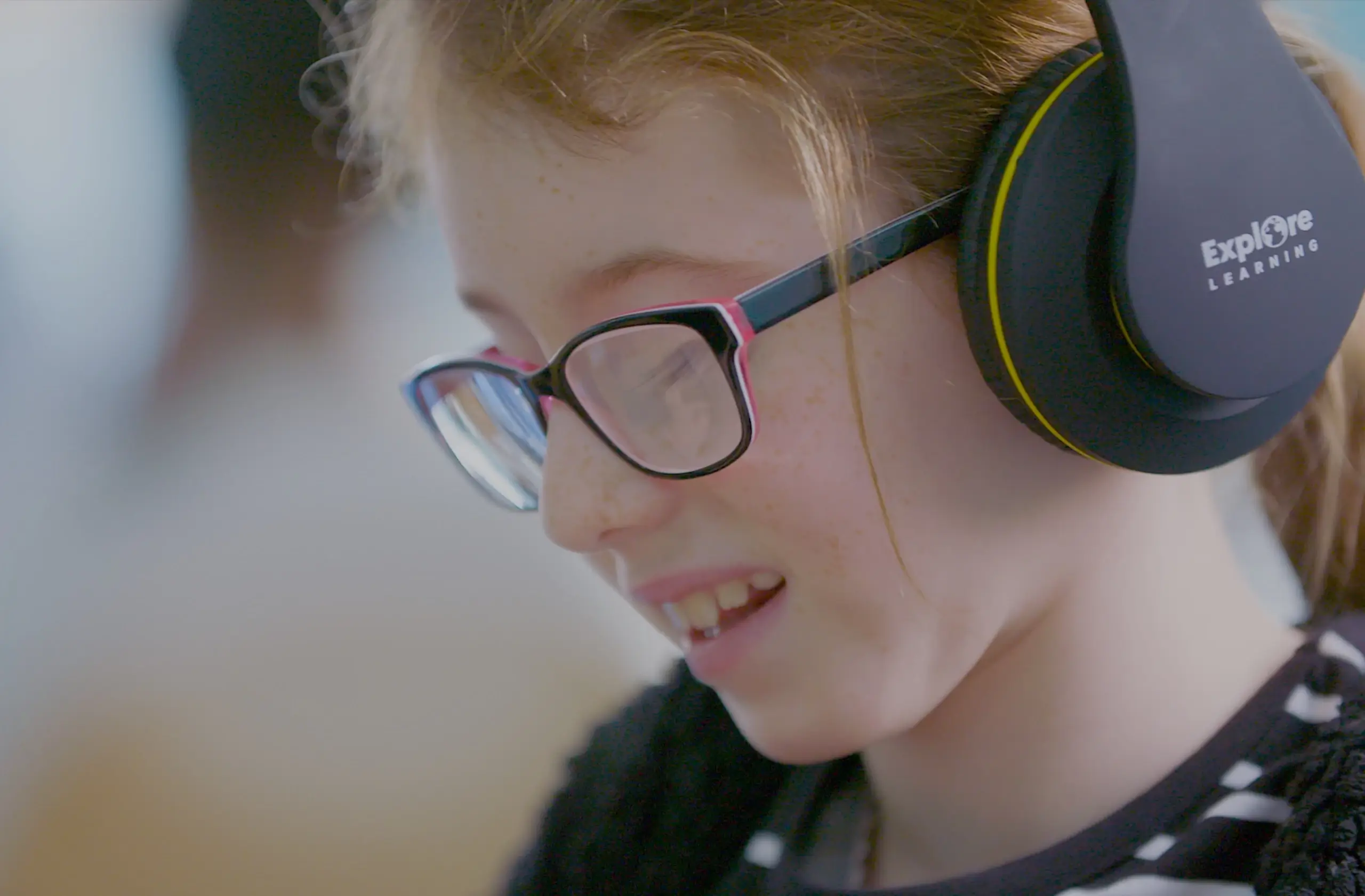
UK Business Tech Transformation Award
Recognised for the transformational impact of cloud-native technology that enabled a rapid shift to online tutoring during the pandemic.
One-third of clients now fully online
The online offering proved so popular post-pandemic that one-third of clients now use the service exclusively, demonstrating demand beyond physical learning centres.
IP-owned cloud-native solution
Explore Learning owns the intellectual property rights to their entire online learning system built on Azure, providing business resilience and a unique marketplace position.
Related reading
Signs Your Legacy System Is Costing You More Than You Think
Modernise, Rebuild, or Replace: A Decision Framework
Reverse Engineering a Legacy System That Has No Documentation
Recovering Business Rules When You Do Not Have the Source Code
Is REA Legal? AI Reverse Engineering and UK Law
Why Legacy to Cloud Migration Is Key to Your Growth
Why Modernise Legacy Systems in the Cloud?
Choosing an App Modernisation Strategy: The Benefits of Rearchitecting
3 Keys to Implementing Microsoft Azure Strategically
Seen enough? Let's talk through your requirements.
Book a free consultationFrequently asked questions
How long does legacy application modernisation take?
Timelines depend on the scope and complexity of your legacy estate. A single application replatform typically takes 4-8 weeks with AI-augmented delivery. A complex enterprise modernisation programme can take 3-9 months. Our phased approach means you see value incrementally, not just at the end.
What are the risks of legacy modernisation?
The biggest risks are business disruption, data loss, and scope creep. We mitigate these with thorough assessment, phased delivery, parallel running, and automated testing. Every modernisation starts with a detailed risk assessment so there are no surprises.
Should I modernise or rebuild?
It depends on the state of the codebase, the business requirements, and the timeline. If the existing application has sound business logic but outdated infrastructure, modernisation (refactor or rearchitect) is usually more cost-effective. If the requirements have changed significantly or the codebase is beyond repair, a rebuild may be the better investment.
Do you provide legacy software development in the UK?
Yes. We are a UK-based team providing legacy software development and modernisation across the country. We maintain, extend, and rebuild systems written in older versions of C# and .NET, alongside ASP.NET, SQL Server, and on-premises platforms.
Whether you need new features on an ageing codebase or a phased move to Azure, our UK engineers are ISO 27001 and Cyber Essentials Plus certified. For the technical detail, see our guide to migrating from .NET Framework to .NET 10.
What does Azure migration cost?
Azure migration costs depend on the size of your estate, the modernisation approach, and the target architecture. A straightforward lift-and-shift might cost £30,000-50,000. A full rearchitect-and-modernise programme ranges from £100,000 to £500,000+. We provide detailed estimates after assessment. See our pricing guide.
Can you support a legacy application without modernising it?
Yes. Our legacy application support service keeps outdated systems stable, secure, and compliant while you plan the right modernisation approach.
We handle:
- Security patching
- Bug fixes
- Performance monitoring
- Knowledge transfer and runbooks
That work covers systems built on older frameworks and languages. Many clients start with support and move to modernisation when the timing and budget are right.
See how AI is changing how we build software
Our quarterly AI Velocity Report tracks real delivery metrics from live projects: how much of our code is AI-authored, how delivery timelines compare to baseline, and which tools are making a measurable difference. No marketing spin, just honest data from a team that builds software every day.
Read the latest AI Velocity ReportSpecialist modernisation guides
Explore our other services
Custom Software Development
When the right answer is to rebuild, not modernise.
DevOps & Modernisation
Modernise your delivery alongside your applications.
Managed Application Support
Ongoing support and continuous improvement post-migration.
API & Integration Services
Integrate modernised applications with existing systems.
AI Development & Implementation
Add AI capabilities to modernised applications.
Ready to stop spending your budget on maintenance?
Start with a free legacy assessment. We will tell you what modernisation looks like for your systems, what it costs, and how long it takes.
Book a free consultationor call 01202 006729