
Building a Claude Skill for Codebase-Aware Bug Reports
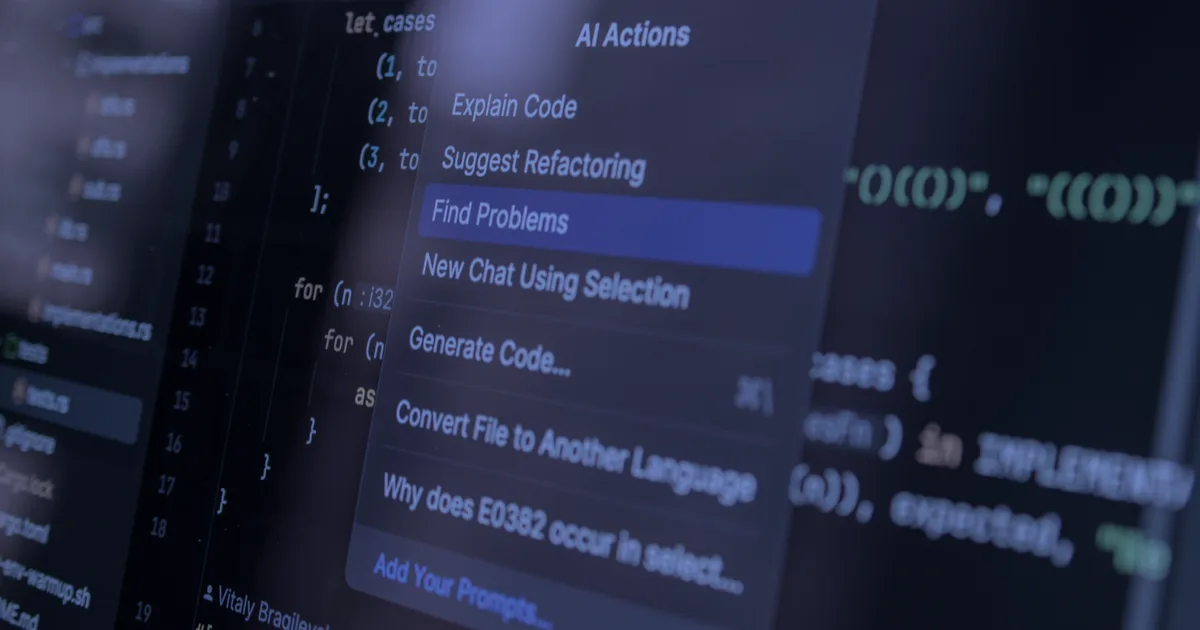
A good bug report takes time: clear reproduction steps, precise expected and actual behaviour, and enough context for a developer to act. We built a Claude skill that knows our ticket format and reads the source code, so a short description becomes a structured, ready-to-log ticket, complete with analysis of the likely cause.
- The skill knows our exact bug ticket format, so output is consistent.
- Codebase access lets it troubleshoot, not just transcribe.
- It suggests where the problem originates and what the fix might look like.
- Developers pick up a diagnosis, not a blank page. The cycle speeds up at both ends.
This is one practice within AI-augmented QA.
Why do good bug reports take so long?
A well-written bug report is not quick to produce. It needs clear reproduction steps, precise expected and actual behaviour, and enough context for a developer to act without a round of follow-up questions.
When you are logging several bugs in a day, that effort compounds. The temptation is to cut corners: a terse description, no steps, a screenshot and a hope. That saves the tester time but costs the developer more, because every gap turns into a back-and-forth that delays the fix.
The slow part is not finding the bug. It is writing it up well. That is the part we automated.
What is a Claude skill, and why give it codebase access?
A skill is a reusable set of instructions and context that teaches Claude to do a specific job consistently. Our bug-report skill has two things that make it valuable: it knows our exact ticket format, and it has access to the source code.
The format knowledge means every ticket comes out structured the same way, matching the standard developers expect. No re-briefing, no drift.
Codebase access is what changes the nature of the tool. Without it, an AI can only rewrite what you tell it. With it, the skill understands the system well enough to reason about the problem, not just describe it.
How does the bug-report skill work?
You give the skill a minimal amount of context: what went wrong and what you expected to see. Because it understands the system, it fills in the rest and adds analysis the source description never contained.
What goes into a ready-to-log ticket?
The output is a complete ticket, not a rough note. A typical one includes:
- Reproduction steps clear enough for a developer to follow without guesswork.
- Expected and actual behaviour stated precisely.
- Likely root cause, reasoned from the source code.
- A suggested fix, as a starting point for the developer to evaluate.
The first two are the report. The last two are the difference. They come from the skill having read the code, not from the tester writing more.
How does codebase access change the developer handover?
Normally a developer picks up a bug report and starts investigating from scratch: reproduce it, find the relevant code, work out what is happening, then fix it. The first three of those steps are repeated effort, because the QA engineer often has the information needed to point in the right direction.
When the ticket already contains a reasoned analysis of where the problem originates and what the fix might look like, the developer starts much further along. The whole cycle speeds up: faster to log, faster to understand, faster to fix.
What are the limits, and where does the human stay in control?
The skill writes reports and suggests causes. It does not decide what is a defect. The QA engineer identifies the issue, supplies the description, and judges severity. The suggested fix is a hypothesis for the developer to evaluate, not an instruction.
There is also a security dimension. Giving any AI tool access to source code means assessing data residency, retention, and whether the tool trains on your data. We apply the same controls to AI tooling as to any system that touches client code, within an ISO 27001-certified delivery framework. It is the same principle behind why we do not let AI ship code unsupervised.
For how this practice fits the wider testing lifecycle, see the AI-augmented QA guide and Quality at the Speed of AI. To discuss your QA workflow, get in touch with the Talk Think Do team.