
Choosing the Right Vibe Coding AI Tool for Long-Term Software Sustainability
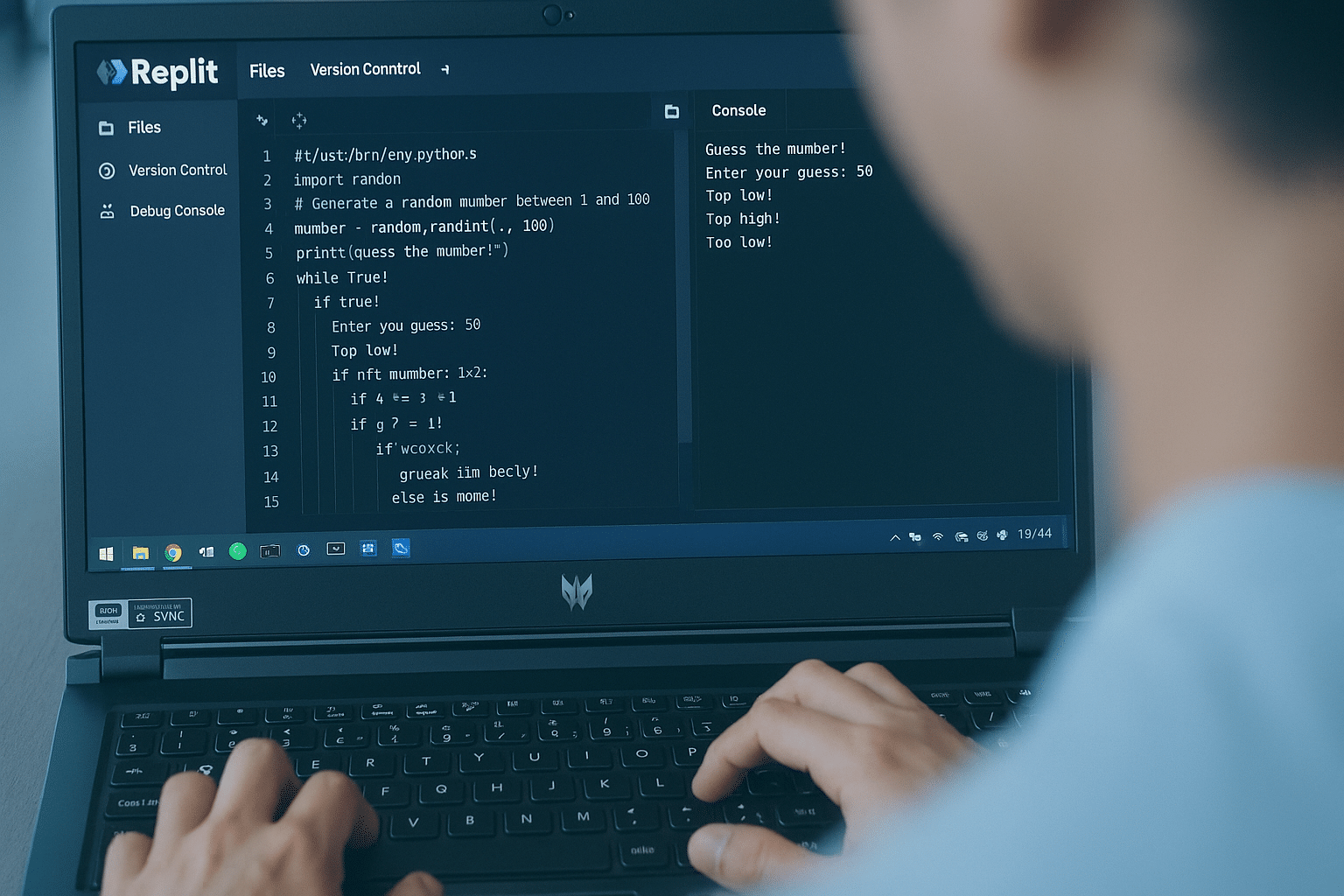
Vibe coding tools like GitHub Copilot, Cursor, and Windsurf build on open standards such as React, TypeScript, and .NET, giving teams AI-assisted productivity without vendor lock-in. Low-code platforms may offer faster prototyping, but they carry significant long-term risks including non-transferable specialist skills, limited migration options, and dependency on a vendor’s roadmap.
In the era of AI-assisted development, software teams are adopting tools that dramatically boost productivity and collaboration. Platforms like GitHub Copilot, Cursor, Windsurf, V0.dev, and Replit are redefining how we write and maintain software. Known as “vibe coding tools,” these platforms help developers in writing code by providing AI-driven assistance during the coding process, such as code completion and real-time analysis. AI coding is becoming a transformative aspect of software development, enhancing productivity and simplifying coding tasks through automation and intelligent suggestions.
While low-code and no-code solutions promise rapid delivery, they often come with significant risks. The most critical of these is vendor lock-in. In a rapidly evolving software landscape, betting your systems on closed platforms introduces long-term challenges that can be costly and difficult to resolve.
This article explores why building on open, real-code foundations using vibe coding tools is the most sustainable strategy for long-term digital success.
Introduction to Vibe Coding Tools
Vibe coding tools are a class of AI-powered software development tools designed to enhance the coding experience by providing intelligent code suggestions, automating repetitive tasks, and streamlining the development process. These tools utilize artificial intelligence and machine learning to analyze existing code, identify patterns, and generate high-quality code snippets. With the ability to support multiple programming languages, vibe coding tools have become an essential part of modern software development. By leveraging natural language processing and context-aware code suggestions, developers can write more efficient, clean, and functional code.
What Are Vibe AI Coding Tools?
Vibe coding tools are modern developer environments enhanced by AI tools to boost development efficiency. They generate, refactor, and streamline actual code, working seamlessly with established technologies like React, TypeScript, and .NET. These tools allow development teams to stay within industry-standard workflows while gaining the benefits of AI assistance.
A coding assistant plays a crucial role in streamlining coding tasks, providing real-time assistance and boosting developer productivity.
Unlike traditional low-code platforms, vibe tools do not:
-
Hide logic behind visual interfaces
-
Require adherence to a single vendor’s tooling
-
Limit extensibility or integration flexibility
Popular examples include:
-
GitHub Copilot: In-editor AI assistance for code completion and generation, featuring AI-powered code completion for intelligent code suggestions
-
Cursor: A developer-centric coding editor enhanced with LLMs
-
V0.dev: Converts designs into functional React components
-
Windsurf: AI-enhanced workspace with source context and tooling integration
-
Replit: Real-time collaborative environment for full-stack development
These tools empower engineers rather than constrain them. They maintain visibility and control, producing real code that can be versioned, tested, and deployed across environments.
Benefits of Vibe Coding Tools
The benefits of vibe coding tools are numerous, ranging from improved developer productivity to enhanced code quality. One of the primary advantages of these tools is their ability to automate repetitive tasks, such as code completion, debugging, and testing. This allows developers to focus on more complex tasks, like writing new code, fixing code, and optimizing code structure. Additionally, vibe coding tools can help identify potential security vulnerabilities, reduce common coding errors, and provide automated documentation. By integrating advanced AI capabilities into the development environment, vibe coding tools can significantly reduce the time and effort required to complete coding tasks.
Key Features of Vibe Coding Tools
Vibe coding tools offer a wide range of features that make them invaluable to developers. Some of the key features include intelligent code completion, context-aware code suggestions, automated test generation, and code review capabilities. These tools can also provide natural language descriptions of code, making it easier for developers to understand complex codebases. Furthermore, vibe coding tools often support multiple programming languages, including Python, Java, and JavaScript, and can integrate seamlessly with popular development environments like Visual Studio Code. With features like error detection, debugging assistance, and code optimization, vibe coding tools are designed to streamline the development process and improve overall code quality.
Why Real Code Matters
Code Is the Foundation of Your Business
Your application logic and data flow, defined by the source code, determine how your product operates. Choosing real code as the foundation provides four key advantages:
-
Portability: Move across platforms and clouds without rewriting core logic
-
Auditability: Trace, test, and validate behavior using standard tools
-
Extensibility: Add new features without starting over
-
Ownership: Retain full control of your intellectual property
Additionally, code documentation plays a crucial role in maintaining and understanding the codebase. It enhances code readability and maintainability by automatically generating documentation and offering tools such as command suggestions.
By contrast, closed low-code platforms lock business logic behind proprietary visual editors, making it harder to debug, extend, or migrate.
The Risks of Vendor Lock-In
Low-code platforms like Mendix, Power Apps, and OutSystems can help teams build apps quickly. However, long-term dependency on proprietary ecosystems carries real risks:
-
Opaque runtime environments
-
Limited support for modern DevOps and CI/CD pipelines
-
Difficult or impossible migrations if the platform is deprecated or acquired
-
Concerns about data security, as open systems can better protect sensitive data
Seamless integration is another benefit of using open, real-code systems, as they effortlessly blend into existing workflows and enhance productivity and accuracy.
Even major technology companies have discontinued platforms that were once heavily promoted:
-
Microsoft Silverlight
-
Microsoft LightSwitch
-
Google App Maker
-
Firebase Bolt
-
Amazon Honeycode
These decisions impacted thousands of businesses. When you rely on vendor-controlled tooling, you are subject to shifts in their roadmap. These may not align with your product’s needs or timelines.
Moreover, even well-established platforms can stagnate or pivot. Investing heavily in a closed ecosystem often means that you are at the mercy of product management decisions made outside your control. Business continuity can be compromised when a strategic tool is abandoned or drastically changed. This challenge is magnified in regulated industries or mission-critical systems where change management is more complex.
Hidden Costs: Specialist Skills and Support Dependency
One of the underappreciated risks of low-code platforms is the skills gap they create. While pitched as “simpler” tools, many low-code platforms still require specialist knowledge to operate effectively. These skills are often non-transferable and difficult to recruit for.
For example:
-
A developer skilled in Mendix may not be able to work on Power Apps without retraining.
-
Custom workflows, integrations, and automations often require deep platform-specific knowledge.
-
Certification programs are expensive and not widely adopted.
This introduces a key person dependency risk. If your expert leaves the organisation, you may be left without the skills required to maintain or evolve your product. This problem is particularly acute in the public sector and SME environments where budgets limit ongoing recruitment.
In contrast, real-code systems built on open standards benefit from a global talent pool. It is far easier to hire engineers with .NET or React experience than to find someone trained in a proprietary, niche visual tool. Real-code systems enhance and streamline the development workflow by integrating AI capabilities that optimize daily coding tasks, automate testing, and improve code quality. This makes real-code systems a valuable tool for enhancing coding efficiency. It also means you can draw on third-party support providers, staff augmentation firms, and consultancies with real-world experience in transitional and recovery projects.
When systems are built in widely supported languages, support becomes portable. If needed, a replacement team can step in, understand the code, and take action with minimal disruption. This is not the case with low-code systems where knowledge is locked in both to the vendor and to individuals within your organisation.
Open Technologies Are the New Software Standard
Building on widely adopted, open technologies provides resilience and adaptability. Frameworks like JavaScript, TypeScript, .NET, React, Kubernetes, and Docker have become the modern equivalents of a software “assembly language.” Additionally, advanced technologies such as AI models, developed by companies like OpenAI and Meta, enhance software development by offering sophisticated functionalities in programming and application enhancement. AI coding tools play a crucial role in modern software development by improving development efficiency, generating code explanations, and enhancing teamwork, while also requiring proper configuration for safety.
These standards:
-
Are supported by active global communities
-
Integrate with modern AI and cloud ecosystems
-
Enable future-proof infrastructure and services
-
Allow modular architecture and clean separation of concerns
-
Reduce long-term technical debt by encouraging standard practices
They are the common language across tools, teams, and industries. Most importantly, they allow organisations to retain independence, foster innovation, and maintain system integrity through disruptive technological shifts.
AI Powered Code Completion Is Moving Fast. Closed Platforms Can’t Keep Up
The pace of innovation in AI has outstripped many traditional platform providers. Building your systems on closed environments limits your ability to adapt. With open code, you can:
-
Integrate the latest APIs and models from OpenAI, Azure, and others
-
Adjust orchestration strategies as new LLM capabilities emerge
-
Swap vector stores, pipelines, or front-end frameworks without rewrites
-
Experiment with fine-tuning and embedding without waiting on vendor updates
-
Combine multiple models or toolchains without breaking integration workflows
AI code generation enhances productivity by using AI-powered tools that generate code from natural language inputs. Providing a clear natural language description of the expected code is essential for effective AI assistance.
Closed low-code systems simply cannot match this flexibility. By the time new functionality is supported, the ecosystem may have already moved on. Innovation should be driven by your product needs, not by a vendor’s backlog.
Betting your core infrastructure on a proprietary framework means betting against your ability to innovate. When new architectural patterns emerge, like retrieval-augmented generation, memory-aware agents, or multimodal support, your success depends on how quickly your systems can evolve to incorporate them.
Comparison: Vibe Coding vs Low-Code Platforms for Code Generation
Criteria
Vibe Coding Tools
Low/No-Code Platforms
Technology Base
Open standards (JavaScript, .NET, etc.)
Proprietary tooling
Code Portability
High
Low
Vendor Lock-in Risk
Low
High
Maintainability
High – standard practices and source control
Low – visual logic and black-box constraints
Team Scalability
High – supports collaboration and dev workflows
Limited – platform-specific knowledge required
Integration Flexibility
Full – any service, API, or cloud
Constrained to vendor connectors
Survivability in Disruption
High – standards last longer than tools
Low – subject to roadmap decisions and market shifts
AI Compatibility
Built-in with GitHub Copilot, Cursor, etc.
Often unsupported or delayed integration
AI Tool
Advanced coding assistants like GitHub Copilot and Cursor provide features such as code completion, debugging assistance, and explanations.
Limited or no support for advanced AI tools.
Code Assistance
Vibe coding tools offer practical benefits like code generation, translation features, and support through AI chatbots, enhancing productivity.
Limited or no code assistance features.
Future of Vibe Coding Tools
The future of vibe coding tools looks promising, with advancements in artificial intelligence and machine learning expected to drive further innovation. As these tools continue to evolve, we can expect to see even more advanced features, such as automated code generation, intelligent code refactoring, and real-time code analysis. The integration of vibe coding tools with other development tools, like version control systems and project management software, will also become more prevalent. With the potential to revolutionize the software development lifecycle, vibe coding tools are likely to play an increasingly important role in the development of complex software applications. As the demand for efficient, high-quality code continues to grow, the use of vibe coding tools is expected to become more widespread, transforming the way developers work and interact with code.
Conclusion: Invest in Code, Not Lock-In
Low-code platforms may offer speed during prototyping but pose major risks for long-term sustainability. In contrast, vibe coding tools give teams the freedom to move fast without sacrificing control or maintainability. An AI-powered code completion tool can significantly enhance developer productivity by automating repetitive tasks and providing intelligent suggestions.
Choosing code-first tools also supports internal growth. Developers can work with transferable skills, infrastructure remains flexible, and new hires do not need to learn niche tools to become productive. This supports faster onboarding, clearer documentation, and a stronger culture of engineering excellence. AI is transforming the software lifecycle by assisting developers throughout various stages, from coding and testing to code reviews and bug fixing.
By adopting standardised approaches, organisations also reduce dependence on internal champions or specialist hires. Teams are able to take on shared ownership of the codebase. When staff move on, projects continue without critical knowledge loss.
In a world shaped by rapid AI advancement and platform churn, the only safe foundation is real, standards-based code. It ensures your applications remain portable, extensible, and secure against ecosystem volatility.
Frequently Asked Questions
Can I migrate an existing low-code application to a real-code stack?
Yes, but it requires careful planning. Most low-code platforms don’t export clean source code, so migration typically means rebuilding core logic in an open framework like React or .NET. Start by mapping your business rules and data models, then rebuild incrementally rather than attempting a big-bang migration.
How long does it take to train a team on vibe coding tools like Cursor or Copilot?
Most developers become productive within one to two weeks. These tools integrate into familiar editors and workflows, so the learning curve is shallow compared to adopting a new low-code platform. Teams already comfortable with TypeScript, React, or .NET adapt especially fast.
Are vibe coding tools more expensive than low-code platforms?
Licensing costs are often lower (GitHub Copilot and Cursor charge per-seat monthly fees), but the real saving is long-term. You avoid vendor lock-in penalties, costly specialist hires, and forced platform migrations. Total cost of ownership over three to five years typically favours open-code approaches.
When does it still make sense to use a low-code platform?
Low-code works well for internal tools with a short expected lifespan, simple data-entry forms, or rapid prototypes that will be rebuilt before scaling. If the application is business-critical, customer-facing, or needs deep integrations, a real-code foundation is the safer long-term choice.
Do AI coding assistants introduce security risks into my codebase?
AI-generated code can contain vulnerabilities just like human-written code. The key safeguard is your existing development process: code reviews, static analysis, dependency scanning, and automated testing all apply equally. Treat AI suggestions as drafts that require the same scrutiny as any pull request.
If you are looking to modernize your stack or transition away from low-code dependencies, consider partnering with a team that specializes in open, AI-powered development.
Talk Think Do helps organisations build future-proof software on technologies that last. If you have already built a prototype with vibe coding tools and need help taking it to production, our prototype-to-production service covers the full journey: code audit, security hardening, refactor or rebuild, and ongoing support.
Let’s build the future together, rooted in real code, not walled gardens. Learn More about how we can support your journey to innovation and excellence.